
RACQ
Tasmania’s untamed North West
Discover Tasmania’s wild North West where rugged coastlines, quirky towns, and unforgettable characters make a memorable road trip.
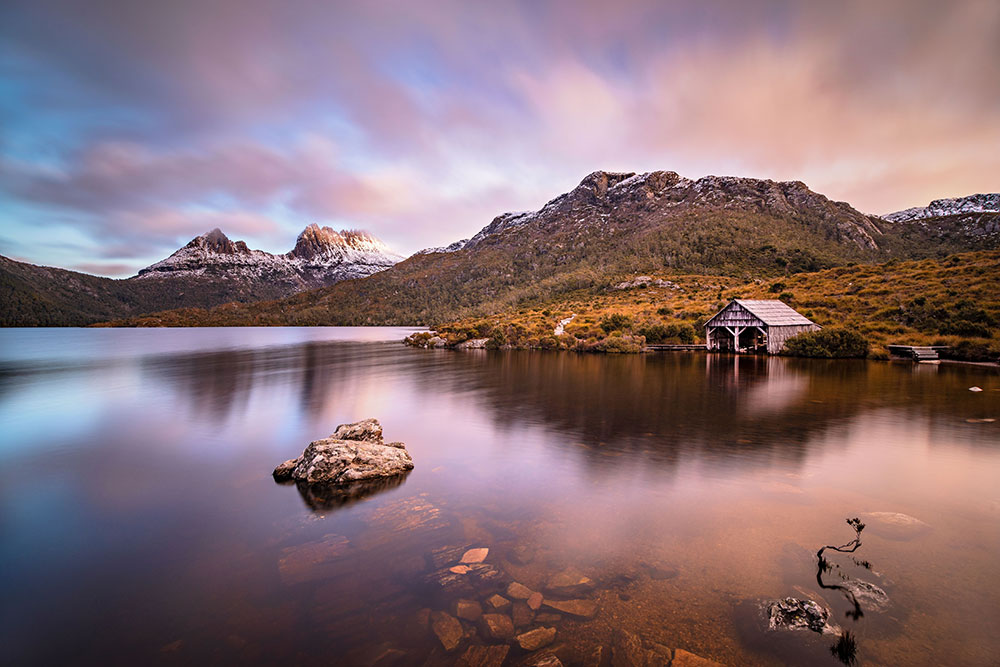
Cradle Mountain and Dove Lake.
I am standing on the Edge of the World, horizontal rain and wild wind threatening to sweep me into the ocean below, where bleached tree limbs lie in tangled heaps.
It’s freezing, and my jumper isn’t cutting it.
Tasmania’s North West coast is off the beaten path, as proved by the wombat strolling across Arthur River’s main road, looking like he’d just finished a morning latte.
Here, locals surf mid-winter if the swell’s right, and steaks come from Cape Grim, just up the road.
This journey began in Launceston, Tasmania’s second-largest city and the gateway to the North West.
The region is known for raw coastlines, just-caught seafood, and plenty of eccentric characters.
The welcome is warm and the conversation lively, whether about politics or where to find the best chippies.
Despite multiple visits to Launceston, I’d never made it to the mythical Cradle Mountain. So, that was my first stop.
Unused to driving on roads where snow lines the edge, warnings of icy patches kept me cautious on the winding country drive.
By mid-afternoon, I reached Discovery Resorts Cradle Mountain Village under blue skies.
Reception staff advised me to head straight for the Visitor Centre, as the weather here can swing from sunshine to snow in minutes. Yesterday, the road into the park was closed until midday.
I jumped on the 3pm bus for a golden-hour glimpse of Dove Lake before the last return at 4pm. Miss that, and it’s a two-hour trudge.
The lake glowed in the late afternoon light, and I returned to our cabin content.
Even if tomorrow brought closed tracks, I’d ticked the box.
After a dinner at the resort’s Hellyers restaurant, I soaked in the spa bath, fire blazing, wondering what morning would bring.
Sun again, so I made a second trip to Cradle before taking the scenic Murchison Highway, leaving ice-warning signs behind.
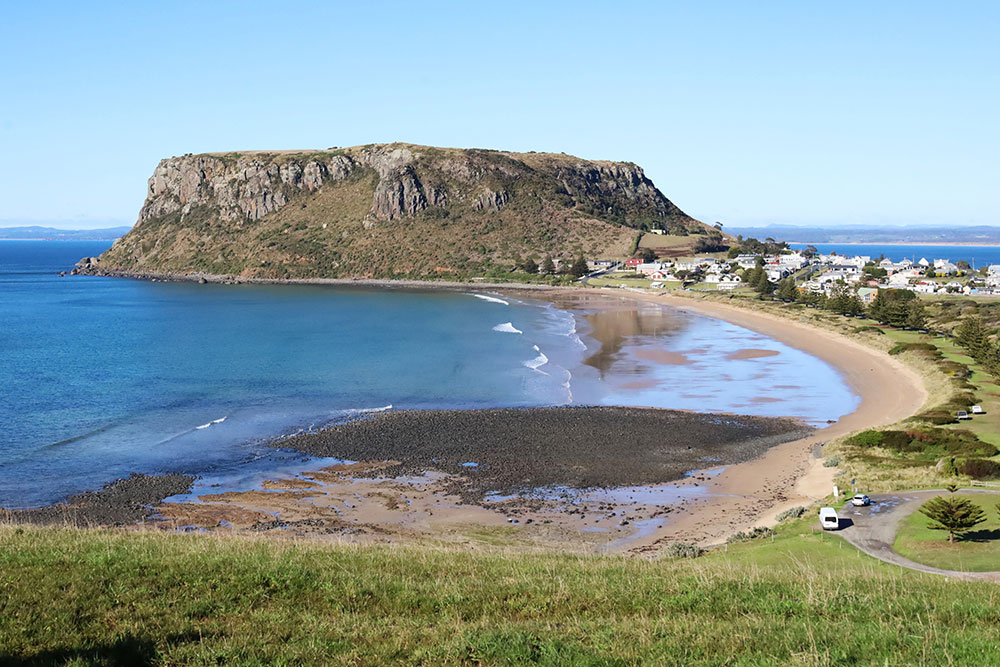
Panoramic view of The Nut and Stanley.
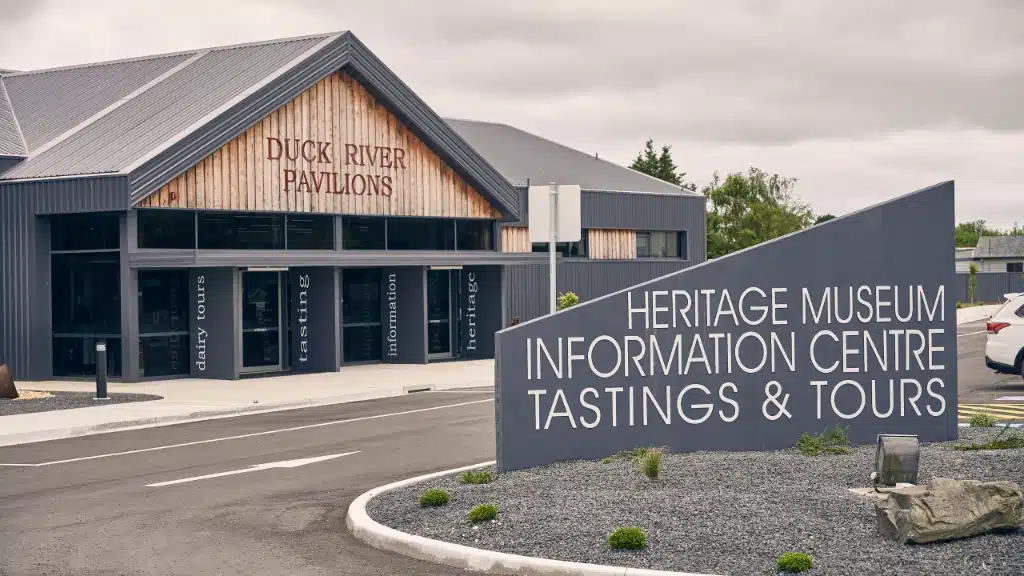
Two hours later, I reached Stanley, wrapped around an ancient volcanic plug called The Nut.
In summer, there’s a chairlift to the top, but in winter, the 152m climb was a hard pass.
Instead, I checked into a luxury beach house at The Inlet, glass of Tassie red in hand, wallabies grazing outside.
It was almost enough to keep me in, but the lure of the Stanley Hotel’s oysters, abalone, flathead and crumbed scallops won.
Locals played pool, a jukebox blasted classics, and the fireplace roared.
Stanley’s quirks go back to the 1800s, with its standout being Highfield Historic Site, built in 1832.
Visiting here is like walking in the footsteps of the colonial founders.
The regency manor has sweeping coastal views and, if you’re lucky, or unlucky, ghosts.
I felt a chill upstairs and wouldn’t step into the basement.
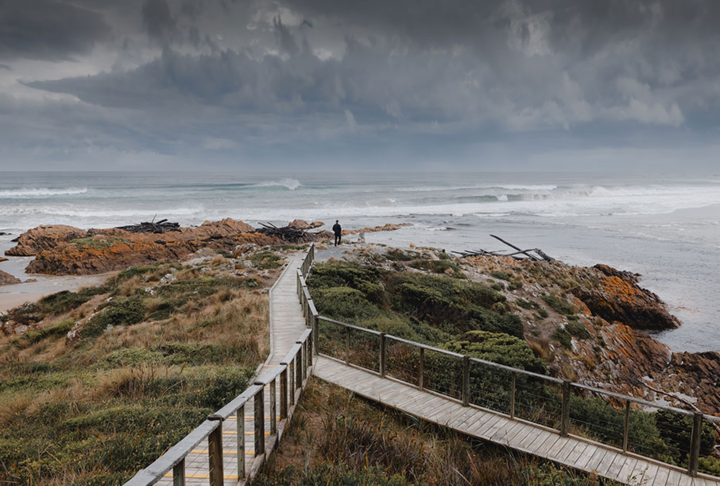
Gardiner Point at the Edge of the World.
From Stanley, Arthur River, and the Edge of the World are just an hour away.
Stop at Smithton for a taste of La Cantara’s artisan Venezuelan-style cheese and a tour of the 24/7 robotic dairy.
It’s a revolution for dairy farmers, and the cows quite like it too.
Don’t miss a Cape Grim steak sandwich at the Marrawah Inn or surfers braving icy waters at Green Point.
Huge sheets of black, rubbery bull kelp sometimes wash ashore here.
That night, seafood still called, so Hursey Seafoods delivered briny oysters and fresh caught crayfish metres from their trawlers.
On the drive back, I detoured to white-sand Boat Harbour Beach for a Palawa cultural walk with Tunapri guide Jye Crosswell around the rugged headland.
Foraging between the rocks, I discovered edible plants and age-old practices.
Later, snuggled into a sand circle, I learnt how bull kelp can be transformed into practical and attractive traditional baskets.
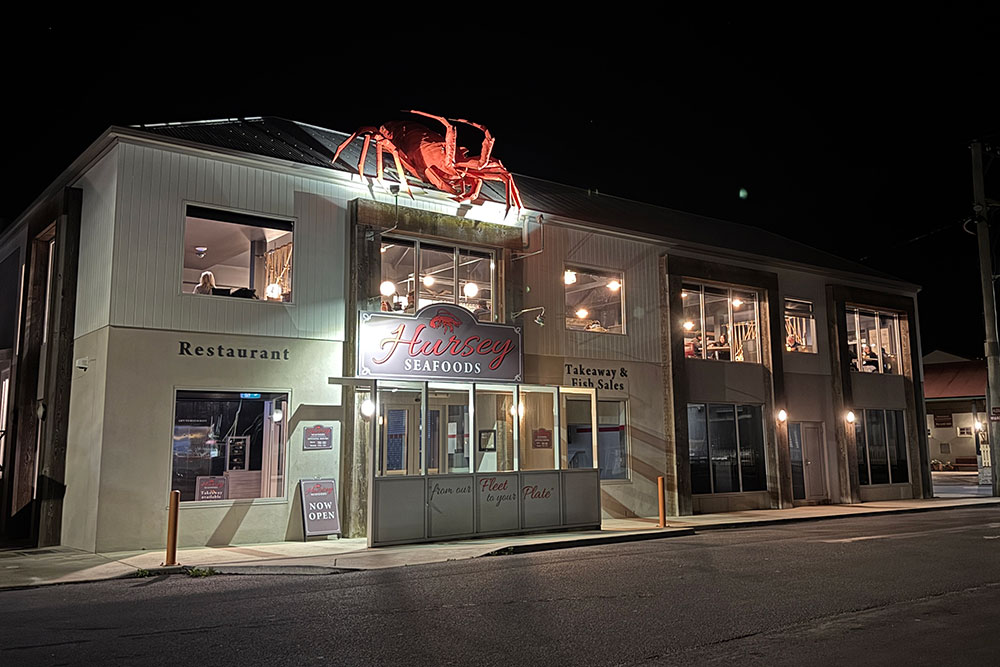
Hursey Seafoods in Stanley.
This is another spot where it’s hard not to linger and luckily, I had booked Sol at Sisters Beach, an Airbnb holiday house with sauna, underfloor heating and decor straight from a glossy mag.
A short walk led to the magnificent Rocky Cape National Park coastline, where sunset painted the water in breathtaking hues.
The road to Launceston was peppered with a tulip farm, a pause at Penguin (a town), and a stop at The Truffle Farm, where Dougie the labrador unearthed truffles that later blanketed my pizza.
Back in Launceston, Peppers Silo, a hotel crafted from old grain silos, provided a quirky finale.
Its Grain of the Silos restaurant dished up regional fare, Tamar River views dazzled, and Archie, the resident dog ambassador, sealed the stay.
In Tasmania’s North West, every bend in the road feels like the start of another story, whether it’s a ghost in a grand old homestead, a wombat on his morning commute, or a fisherman hauling lobsters straight from the sea.
It’s raw, rugged and sometimes wild enough to blow you sideways, but it’s also welcoming in a way that lingers long after the journey ends.
Drive it once, and you’ll be planning your return before you’ve even unpacked the car.
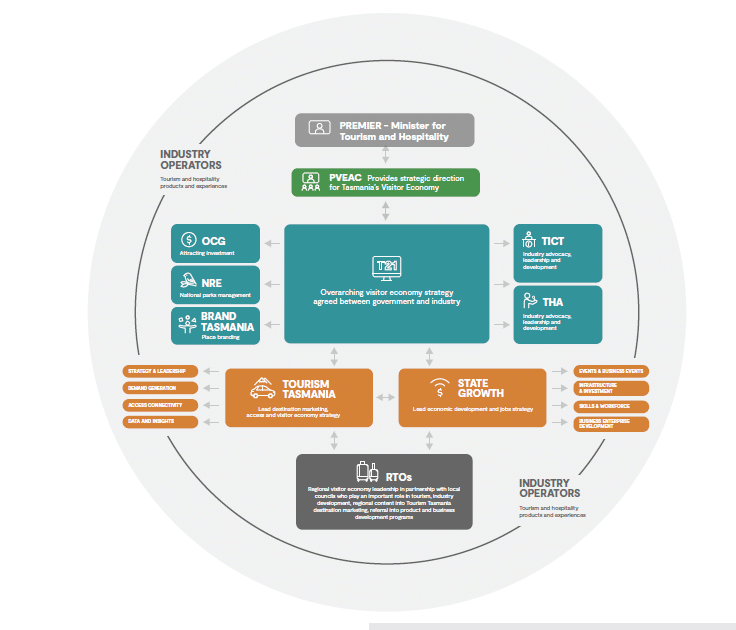
CHTA, TTas, WxNW, RTOs……. what do all the acronyms mean?
CHTA, TTas, WxNW, RTOs……. What do all the acronyms mean?
Ttas - Tourism Tasmania
Every state and territory in Australia operates its own government tourism agency.
Tourism Tasmania is tasked with boosting demand for visits to Tasmania by conducting destination marketing, supported by robust research.
In addition to its marketing efforts, Tourism Tasmania forms commercial marketing partnerships with domestic and international carriers, media outlets, travel retailers, and brand partners. These collaborations help promote Tasmanian tourism experiences and drive holiday sales and bookings to Tasmania.
Department of State Growth
Within the Department of State Growth sits the Tourism and Hospitality Support Unit (THSU). The primary focus of the THSU is on encouraging investment in quality visitor infrastructure and building capability, capacity and community.
Events Tasmania
Events Tasmania offers a range of funding and development opportunities to encourage event organisers to stage their next event in Tasmania.
Tourism Industry Council Tasmania (TICT)
This is the peak body that represents and acts for the Tasmanian tourism industry at a statewide level. TICT runs a number of initiatives to encourage continual business development including the Australian Tourism Accreditation Program, Tasmanian Tourism Awards, Tasmanian Tourism Conference and other workshops and forums. TICT engages fully with DST and Tasmania’s other regional tourism bodies in developing policies and coordinating advocacy and activities of statewide relevance.
Regional Tourism Organisations (RTOs)
Tasmania's four Regional Tourism Organisations (RTOs) aim to increase regional dispersal by motivating visitors to travel more extensively, extend their stays, and increase their spending. These RTOs establish the strategic vision for tourism in their regions, outline annual priorities, and implement programs that involve local industry and stakeholders. They possess the independence to design and execute effective development and marketing programs for their regions and are accountable to their industry and key stakeholders.
Tasmania's RTO’s
- West by North West (WxNW)
- Destination Southern Tasmania (DST)
- Visit Northern Tasmania (VNT)
- East Coast Tasmania Tourism (ECTT)
West x North West (WxNW)
West by North West (WxNW) is one of four regional tourism organisations (RTOs) across Tasmania, each funded by the Tasmanian government to work with our tourism industry at a local and regional level; and with government at all levels. Our work forms part of the state's T21 Visitor Economy Strategy.
Local Tourism Associations (LTAs)
Local Tourism Associations nurture and strengthen local tourism businesses by encouraging local industry networking and by liaising with regional tourism authorities and state bodies on behalf of operators, to address issues at a more local level.
Circular Head Tourism Association (CHTA)
The objectives of the Association focus on promoting and enhancing tourism in Circular Head and its adjacent areas. Key goals include fostering an appreciation for the region as a tourist destination, increasing membership among local tourism stakeholders, and encouraging collaboration among members to boost their tourism-related knowledge, skills, and awareness. The Association aims to maintain high standards of quality in local tourism experiences and services, advocate for the preservation and enhancement of the area's scenic and cultural attributes, and heighten community awareness of tourism's benefits. Additionally, the Association seeks to engage with government bodies at various levels and cooperate with other organisations to strengthen its influence and effectively achieve its aims.
Local Government
Circular Head Council - who contribute to some running costs and specific marketing initiatives and other strategies. Local councils also advise on building, zoning, operating and health and safety issues that are necessary to consider when operating a tourism business or running an event. Local councils also advise on building, zoning, operating and health and safety issues that are necessary to consider when operating a tourism business or running an event.
Other tourism-related organisations
The Australian Tourism Data Warehouse (ATDW)
Australia’s national platform for digital tourism marketing in Australia. Established in 2001, the ATDW is jointly owned and managed by all Australian state and territory government tourism bodies.
Tasmanian Chamber of Commerce and Industry (TCCI)
This is Tasmania’s peak business organisation with a statewide membership drawn from all industry sectors.
Tasmanian Hospitality Association (THA)
The THA is the peak industry body for hotels, accommodation, restaurants, cafes, caterers, community, sporting and RSL clubs in Tasmania.
Brand Tasmania
Brand Tasmania is the first statutory place-branding authority to be established in Australia, created under the Brand Tasmania Act 2018. It is responsible for taking a best practice approach to ensure the Tasmanian brand is strengthened locally, nationally and internationally, and is promoted as a key asset of the Tasmanian community.
Business Events Tasmania (BET)
BET is the peak organisation for the business events sector in Tasmania.
Women in Tourism & Hospitality Tasmania
WITH Tas provides support, mentoring and networking opportunities to all women in the tourism and hospitality industry in Tasmania, through hosting events designed to inspire, motivate and inform as well as provide an informal way for new women in our industries to meet and connect with others in a welcoming and supportive environment.
Arts Tasmania
Arts Tasmania is the government agency responsible for policy and planning for arts and culture in Tasmania and for the development of the arts industry and movable cultural heritage sector.
Heritage Tasmania
The Tasmanian Heritage Council and Heritage Tasmania in the Department of Primary Industries, Parks, Water and Environment, work with the community to identify and protect significant historic heritage places through listings on the Tasmanian Heritage Register.
Tasmanian Visitor Information Network (TVIN)
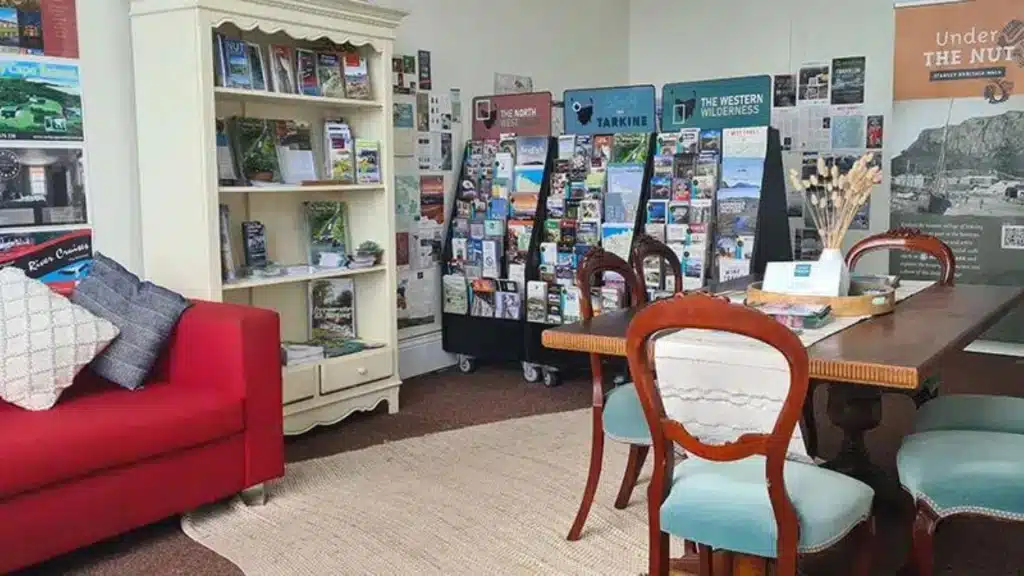
TVIN is a network of Visitor Information Centres strategically located throughout Tasmania who can help promote your product and can also make bookings.
Wine Tasmania
This peak body for Tasmanian grape growers and winemakers and is focussed on building the profile of, and market for, Tasmania’s premium cool climate wines.Australian
Tourism Export Council (ATEC)
ATEC is a national tourism association, representing more than 850 members across Australia including large national and multi-national companies as well as small and medium-sized enterprises, many of whom are based in regional and remote parts of Australia.
T.O.P. Fish Tas
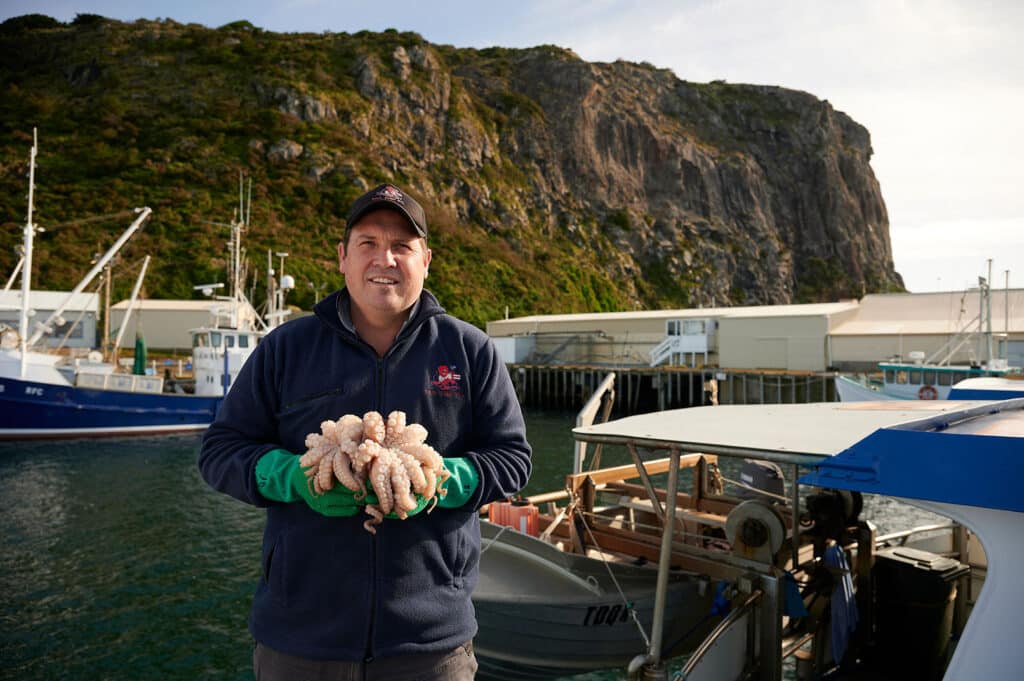
Top catch for T.O.P. Fish Tas
The wild waters of Bass Strait separate Tasmania from mainland Australia. Fishers who live and work along this infamous stretch of deep blue are rewarded with some of the finest seafood in the world.
Locals Michael and Jan Hardy first began braving the Roaring Forties for octopus in the 1970s. Almost half a century later, joined by their sons and even a grandson, their specialised octopus fishing techniques continue to place gourmet products on plates around the world.
Octopus palladius is a medium sized species found across Bass Strait, including around King and Flinders Islands. “They tend to hide during the day, becoming active at night when they emerge to hunt for crustaceans,” says T.O.P Fish Manager Martin Hardy. “They’re a tasty and very versatile species. We sell them tenderized and flavoured in a number of different ways.”
Octopus remain at optimal freshness
Most interestingly is just how the Hardy’s make use of 20,000 specially designed pots. Set on more than 150km of line, each pot provides a temporary home for an individual octopus. Once the weather is favourable, the pots can be pulled and each octopus carefully removed. It’s an ecologically sensitive way of fishing, requiring no bait or disturbance of the sea bed.
Once on board, the octopus are gutted by hand and immediately placed on ice. The process ensures that the product remains at its optimum level of freshness. This is an industry all about quality.
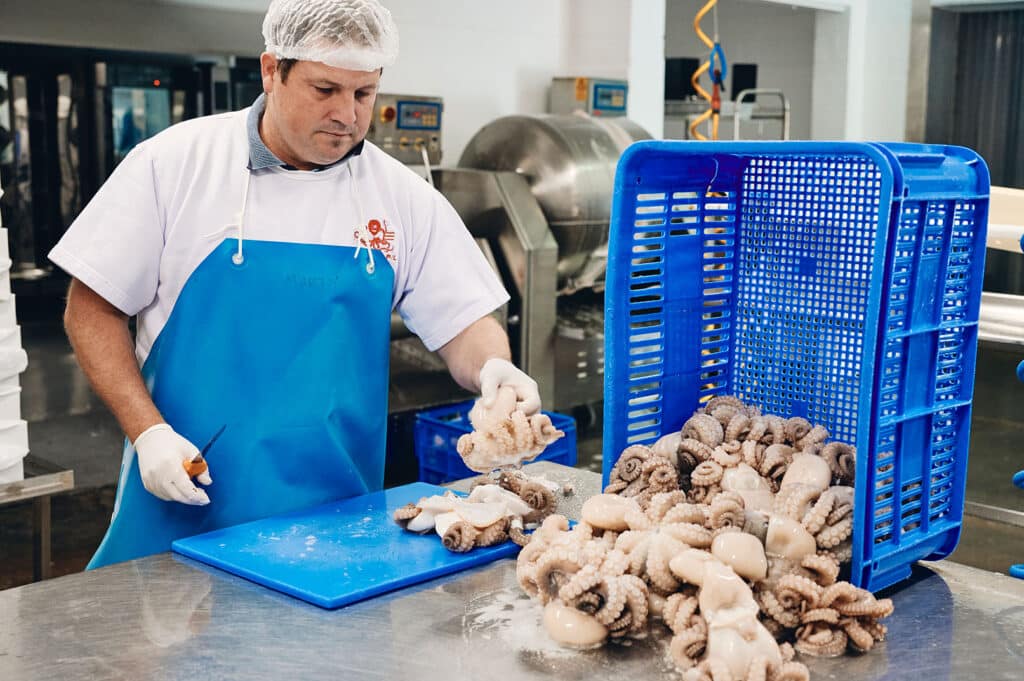
Gourmet octopus remain the signature product produced by T.O.P Fish. However, over the years the Hardy’s have diversified into other Tasmanian gourmet delights, including rock lobster, abalone and crab. Five vessels are utilised to deliver octopus and live seafood fresh from the Strait into the fishing port of Stanley in Tasmania’s far north west.
Never a dull industry
Bulk octopus sales occur by the pallet, whilst value adding at T.O.P Fish continues produce the company’s bestsellers. Favourites include 350g jars and 5kg buckets of tenderised and pre-cooked octopus. Three different flavours are available - mouth-watering honey chilli and garlic, barbeque, and pickled. Each makes a perfect addition to salads, stir fry dishes and gourmet platters. Steamed octopus is sought after to be served both hot and cold, whilst tumbled octopus is tenderised and shipped to restaurants across the country. Discerning diners are always keen for a taste of Tasmania’s best. “This is never a dull industry,” says Martin. “We embrace each new day and every new challenge. It’s a hardworking team always striving to deliver for our customers.”
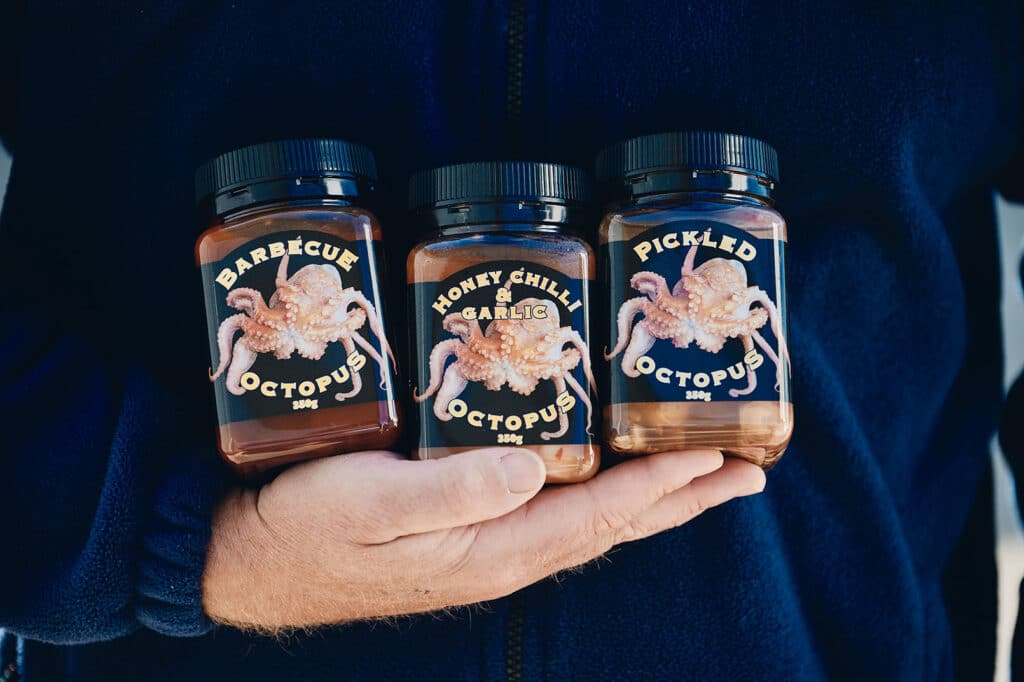
A taste of a T.O.P Fish delight can be hooked at local grocers around Tasmania.
For further details and orders visit the T.O.P Fish website.
Blue Hills Honey – incredible hive of activity
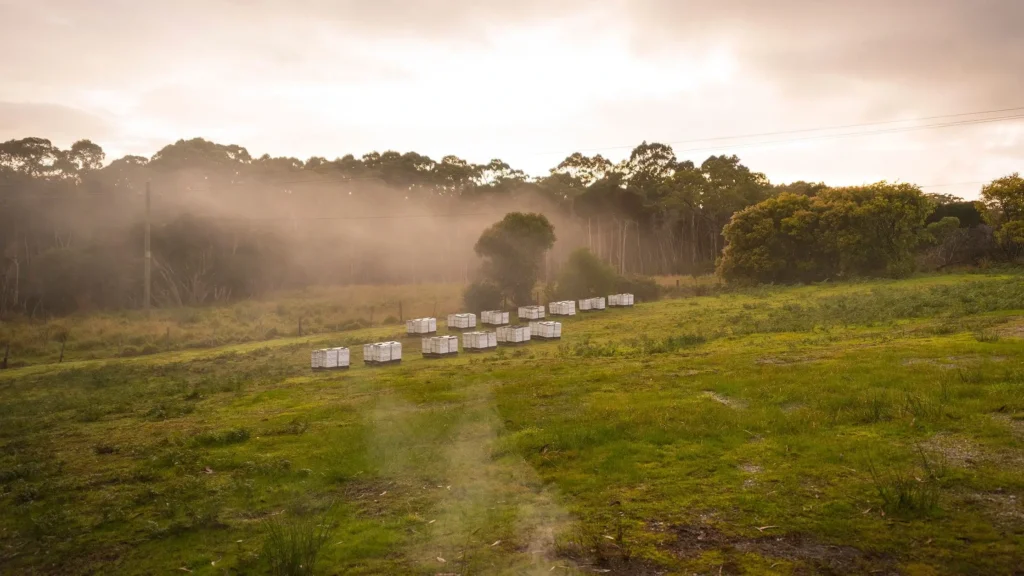
Blue Hills Honey - a hive of activity
The tiny township of Mawbanna is breathtakingly beautiful. Perched on the edge of Tasmania’s pristine Tarkine wilderness, this glorious rural hamlet isn’t just considered paradise by the locals – it’s also perfect for bees.
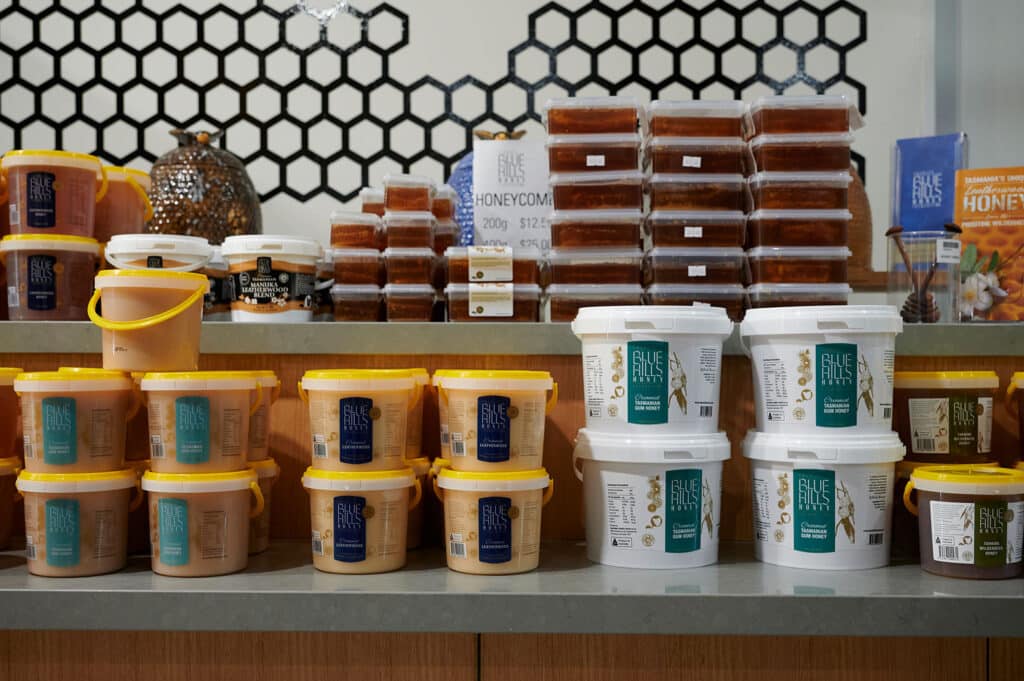
Nicola and Robbie Charles manage more than 2000 beehives throughout the Tarkine region. Spread out in groups of around 100, each hive houses approximately 80-100,000 bees during harvest season, and about 20-30,000 during the cooler winter months. The groups are roughly five kilometres apart, enabling the bees to have their own fly range.
“Each honey we produce is different,” explains Nicola. “Regional variation plays a big part in our industry. The soils, the plants…the smell, aroma and taste very much vary according to location, a lot like wine in many ways. Honey really encapsulates the favours and essence of an area.”
Tasmanian Leatherwood Honey
The leatherwood tree, found only within the cool temperate rainforests of Tasmania, has become a crucial part of Blue Hills Honey story. “It’s our single most important nectar plant,” nods Nicola. “The honey we produce from it is often described as ‘the taste of the rainforest’. Tasmanian leatherwood accounts for about 70% of our honey and we’d really love to see it permanently protected. A lot has been lost over time, to the point where it’s now a rare and threatened species.”
From the bold and complex flavour imparted by leatherwood, the Charles’ also produce a range of other tantalising flavours. Stands of wild blackberries, clovers from nearby farming fields, and Tasmanian pepperberries all impart unique flavours to some of the Blue Hills Honey best sellers. A premium Tasmanian Manuka Honey, renowned for its antibacterial properties, is highly sought after on the international stage.
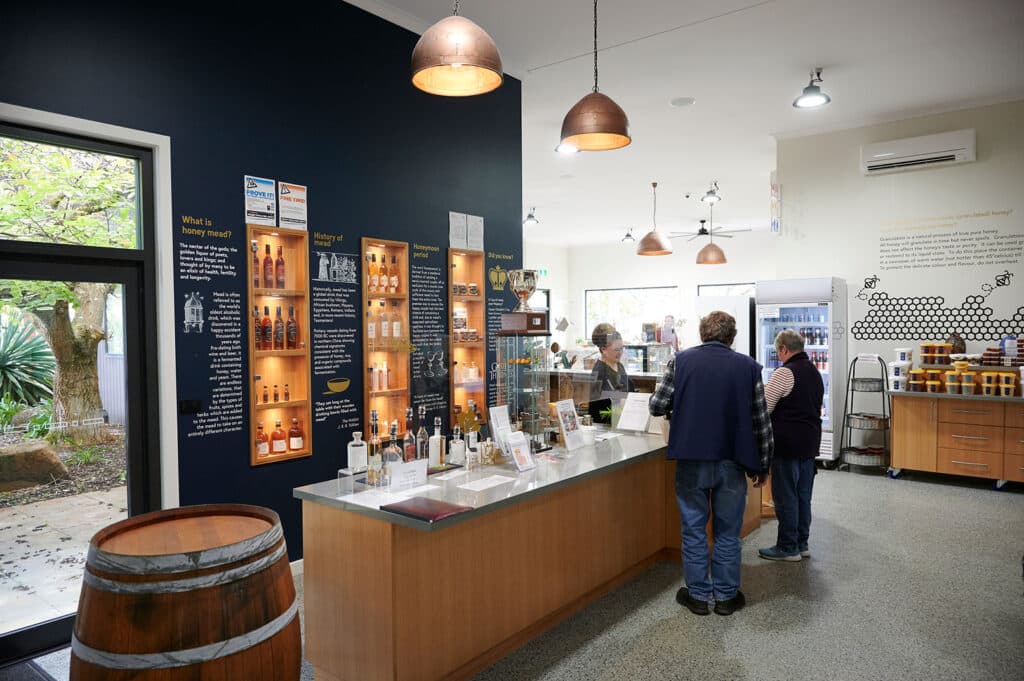
Blue Hills Honey is a true family operation. Robbie himself is a third-generation beekeeper. “There’s a strong history here,” says Robbie proudly. “Dad, along with the support of my mum of course, started the family business back in 1955,” he explains. “I wasn’t one for school, so I quickly learnt to love beekeeping too. It’s a legacy that’s come to shape where we are today.”
Blue Hills Honey experience is cutting edge
Today, Nicola and Robbie’s passion for bees is readily transferred to others. Blue Hills Honey not only offer a glass front facility that allows visitors to observe the honey production process, but also host special events allowing visitors access to Australia’s first virtual reality beehive experience. Imagine stepping inside a beehive…flying over a leatherwood forest…or being a bee being tapped out of the box during a harvest. The Blue Hills Honey experience is cutting edge.
“What we do as an industry involves a lot of hard work and we notice that when we explain that well, the public really appreciate and understand the value of the product,” says Nicola.
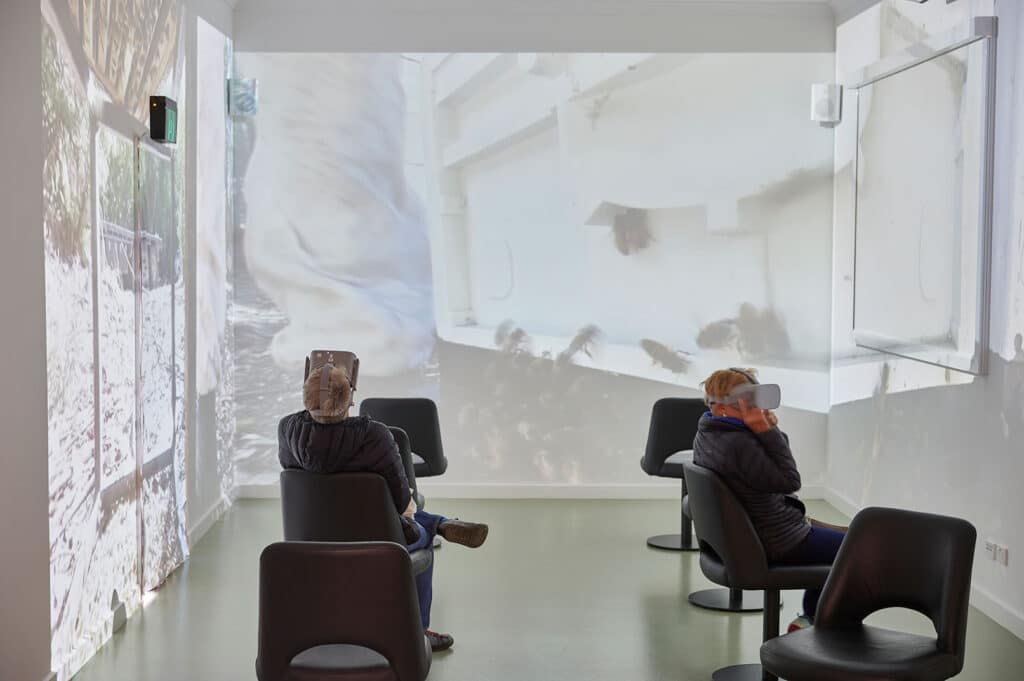
Just a few kilometres along the road from the striking Dip Falls and Big Tree, it’s easy to make a day of a visit to Blue Hills Honey. Call in for a good coffee and some delicious honey sampling. Blue Hills Honey is 100% Australian sourced, straight from the pot with no additives – it’s liquid gold!
For further details visit the Blue Hills Honey website.
Three Friends Abalone
Three Friends Abalone
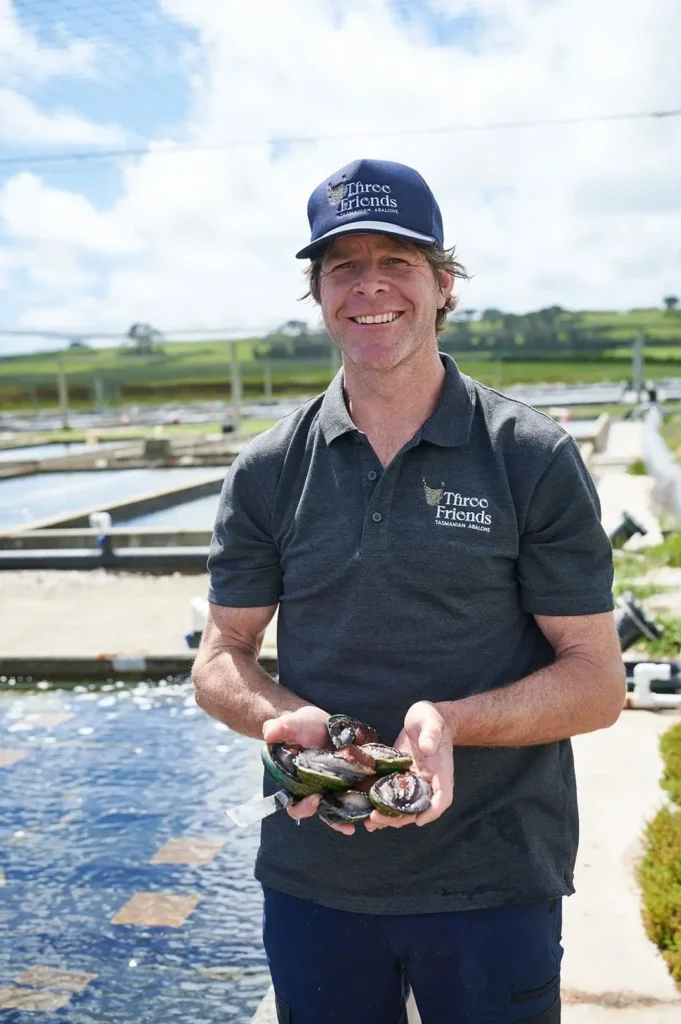
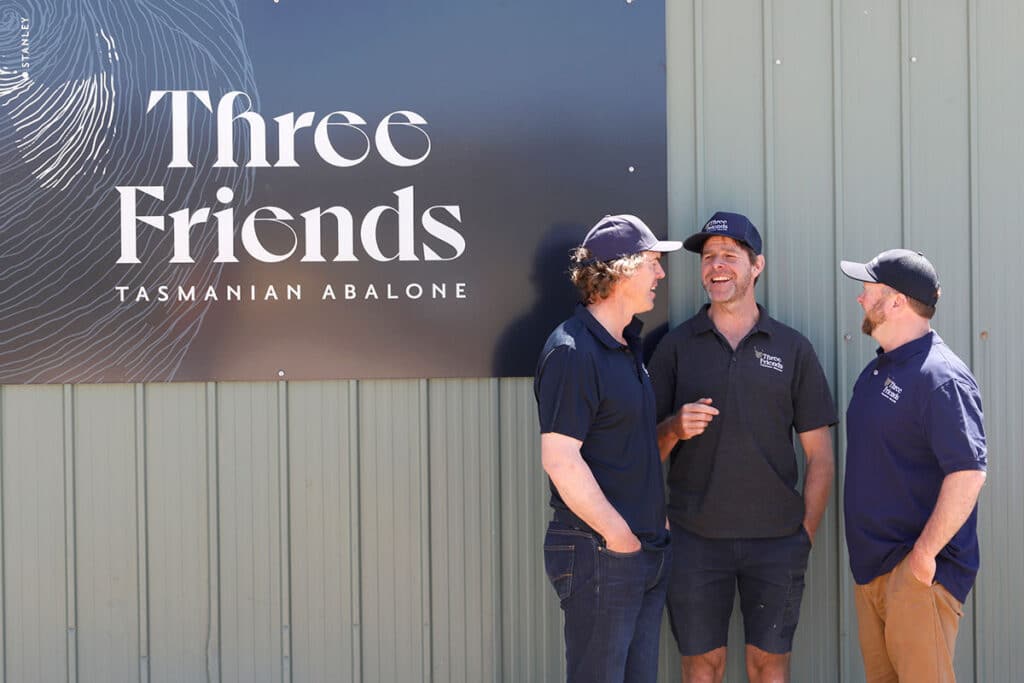
A shared passion for abalone bought mates Joel, Shane and Tom together. The trio initially met whilst working at an abalone farm in Victoria, bonding over a belief that quality always reigns supreme. Over 60 years of combined experience taught them that some of the world’s best abalone can be successfully farmed using sustainable farming techniques.
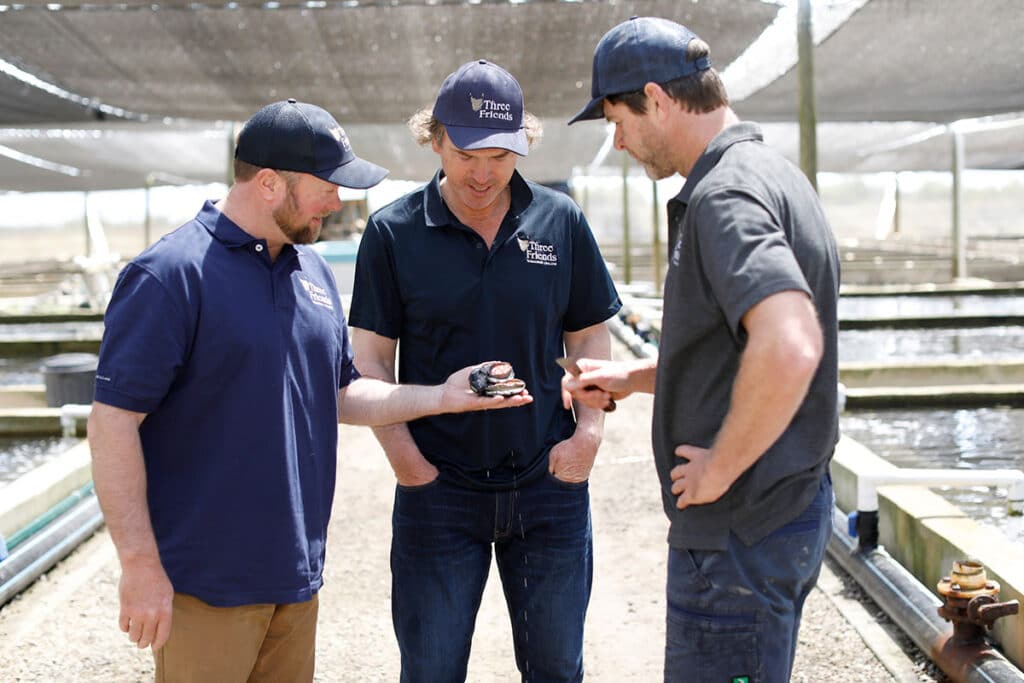
When a run-down abalone far became available on Tasmania’s far north west coast, these enterprising mates jumped at the opportunity to create their very own boutique operation. Nestled behind The Nut at Stanley, the site offered the space they needed right alongside the pristine waters of Bass Strait. “It is a long way from anywhere here - isolated, beautiful and the marine life is just fantastic,” explains Joel. “Whilst a lot of the existing infrastructure was very run down, that allowed us to purchase the farm at an affordable price. We then set about rebuilding the tanks and replumbing. We basically started afresh with our entire focus on creating products of the highest integrity.”
Three Friends Abalone at pristine waters of Tassie
Southern Australia is famed for these fleshy gastropod delights, and nowhere more so than in Tasmania. Three Friends Abalone raises three different abalone species; black lip, west coast and tiger abalone – all carefully nurtured by the pristine waters of Tassie’s west coast. Black lip abalone, with its distinctive dark band along the edge of its shell, is particularly sought after for its creamy, delicate flesh. It’s a gourmet delight prized for its sweet and salty – or umami – taste.
More than three million tiny charges are carefully watched over at Three Friends Abalone. The process begins with the natural spawning of brood stock and the selection of the strongest larvae. After feasting on algae in the nursery, the abalone will grow to a couple of centimetres in size before then being introduced to a special cereal-based diet.
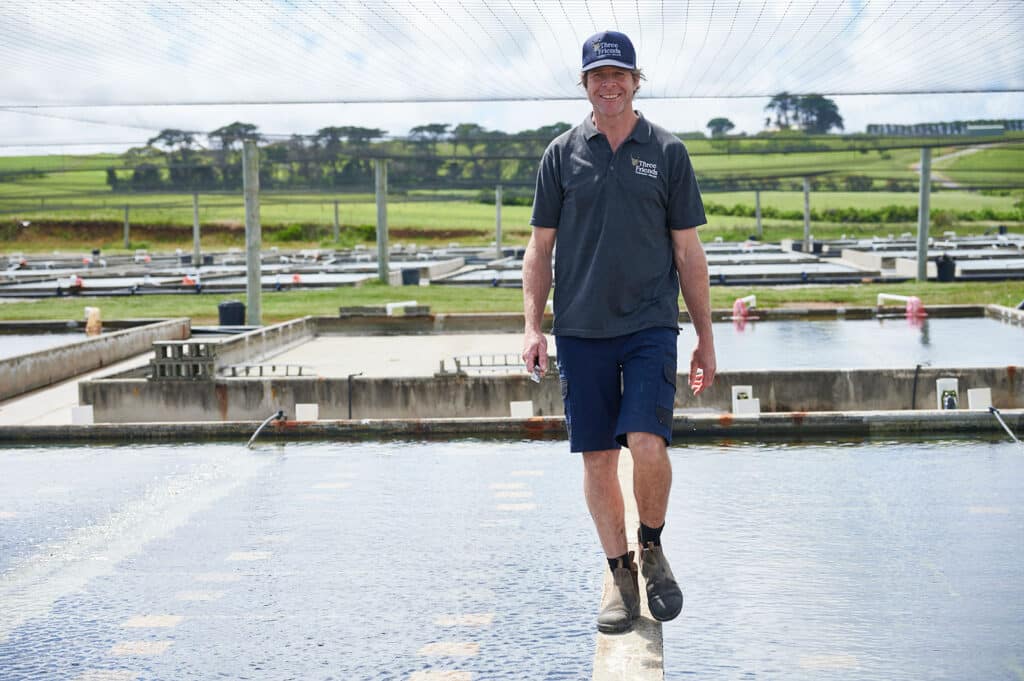
An impressive series of immaculately maintained pools, continuously refreshed with wild west coast waters, provide the perfect home for the abalone. Joel, Shane and Tom must care for their charges for two to three years before carefully hand harvesting and preparing them for processing. It is then straight from here to dining tables and restaurants across the globe.
Sync with the natural cycles of the ocean
Underpinning the transformation of this unique farm is a genuine respect for the natural world. “We’ve designed our farming methods to be in sync with the natural cycles of the ocean,” explains Joel. “What we do mimics nature and we can ensure our produce is free from anything that wouldn’t naturally be found in the sea. We’ve worked hard to create some of the most environmentally sound aquaculture practices in the world. Here in Tassie our power is 100% renewable, plus the help and support from the local community has been just outstanding. Stanley has a terrific community spirit.”
“Our abalone is cleaned and ready to eat, so it’s ready for anyone to enjoy at home,” explains Joel. “It’s hard to beat that smooth, salty sweet flavour. There’s really nothing else like it.”
A 425g can of Three Friends Abalone can be delivered straight to your door, and you’ll be pleased to know it requires minimal cooking. It is best consumed when just warmed through, although can also be eaten cold. Grab a taste of what the cleanest air in the world and the cool waters of the wild west coast can produce via the Three Friends Abalone website.